RoboSummit 2026: Engineering the Future at Strawberry Fields
November 20, 2026
The SFHS RoboSummit 2026, held on 30th October 2026, was a joint collaboration of the Physics and IT
Departments, bringing together young robotics enthusiasts from 23 schools across the Tricity and beyond
for a day that pulsed with energy, precision, and the unmistakable thrill of competition. From the youngest
participants building air-powered cars to senior high schoolers coding autonomous robots, the campus of
Strawberry Fields High School transformed into a vibrant arena where engineering met sportsmanship
and creativity met code. With participants spanning Grades 3 to 12, this edition of RoboSummit was
arguably the most diverse and expansive yet — in scale, in school representation, and in sheer
competitive spirit. The event was organised by a four-member Organising Committee: Agam Bir Singh
Nandha and Manya Mahajan of Class 12C, Adah Kapoor of Class 11C, and Aarav Gupta of Class 10A
— students who channelled months of planning, coordination, and determination into making the day a
reality.
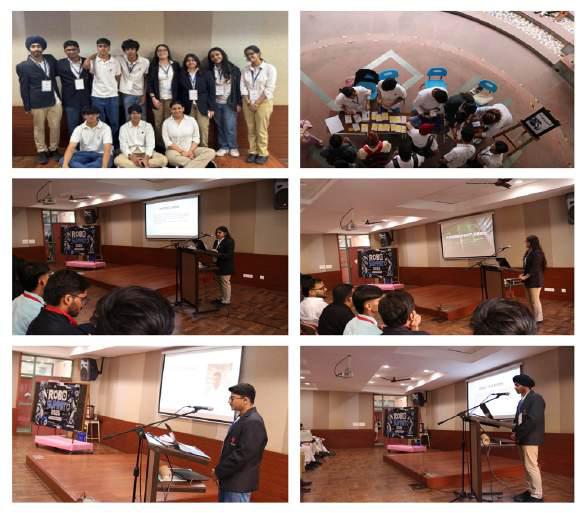
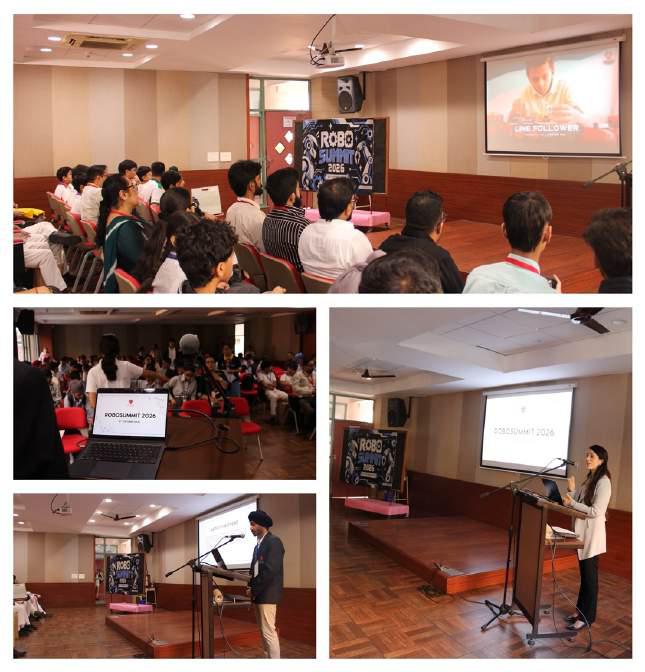
The day commenced with an inaugural ceremony that set the tone with clarity and inspiration. Principal
Ms Nisha Kaul addressed the gathering, her words drawing a vivid picture of what STEM education means
at SFHS and what it means to be part of a community that dares to build, to fail, and to try again. Her presence and message energised participants from the very first hour. The Organizing Committee followed, outlining the day’s flow and reminding
teams of what lay ahead — six events, three verticals, and a full day of competition across every corner of the school.
The event was made possible through the tireless effort of volunteers drawn from the Technology Council
of the High School and Middle School, and the Cybersecurity Council of the High School and Middle
School, who managed logistics, guided participants, managed crowds, and ensured the day unfolded
without a hitch. Their efficiency was visible from the very first movement of teams out of the assembly hall
and into the arenas.
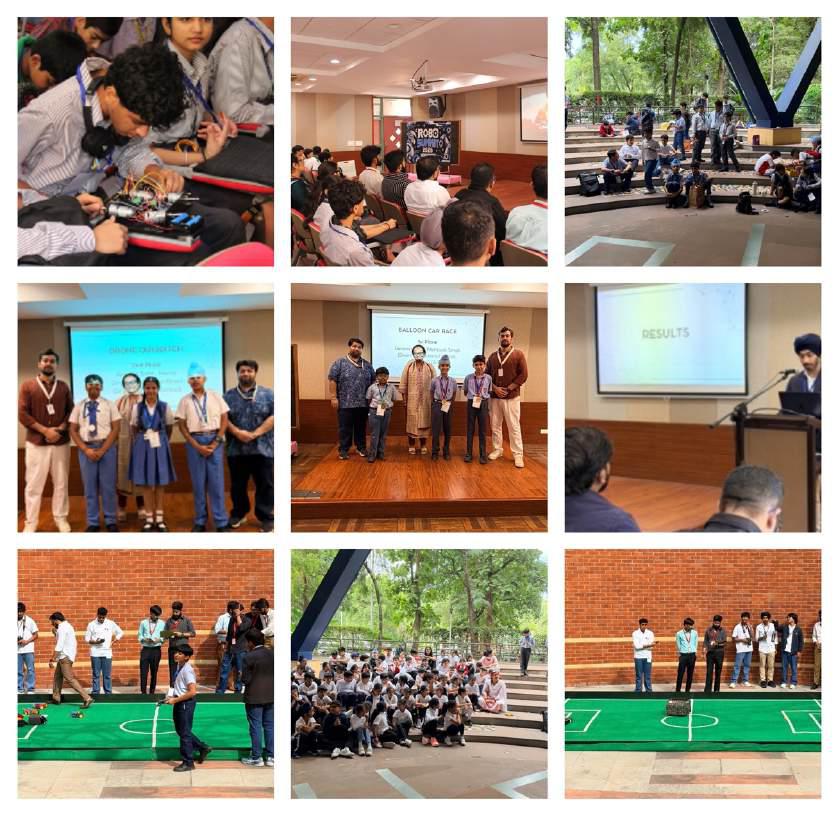
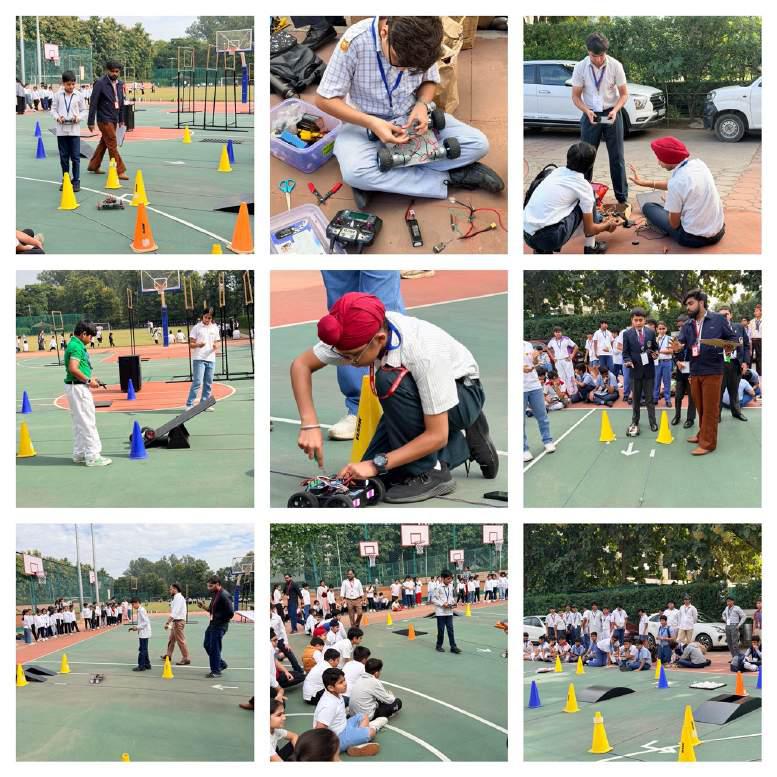
The morning opened with the Balloon Car Race, and if there was one sight that captured the pure joy of
STEM, it was this — 31 Junior School participants, many of them stepping into a competitive robotics
arena for the very first time, gathered at Natyashala with their hand-built air-powered cars. The
atmosphere was electric with the energy only young children can generate: cheering, wide-eyed
anticipation, and a competitive fire that belied their age. Teams had engineered their vehicles without
motors or electronics, relying entirely on the force of trapped air and their own design instincts. Each run
brought a fresh burst of applause, and the event quickly established itself as a crowd favourite — a
reminder that robotics, at its heart, is about making things move.
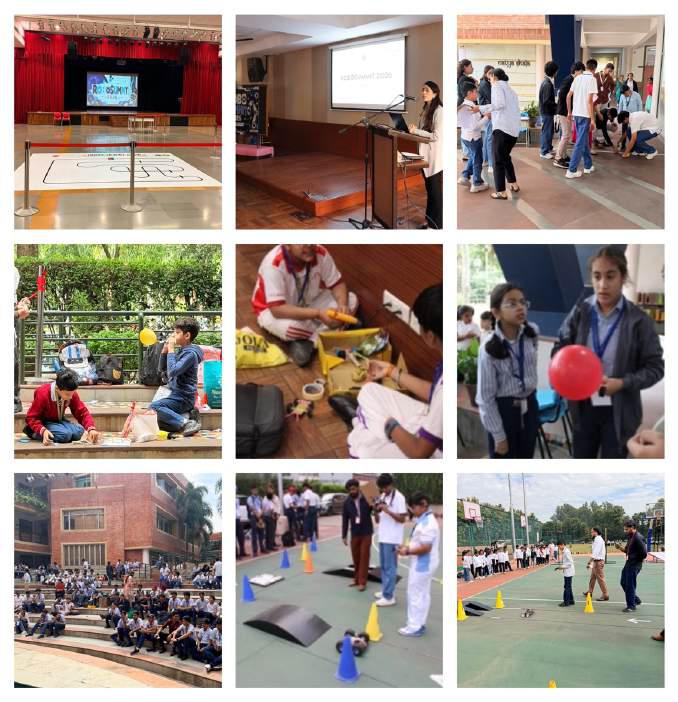
Newton Hall hosted both the Hydraulic Arm and Line Follower events, where the atmosphere shifted from
exuberant to intensely focused. The Hydraulic Arm challenge demanded a completely different kind of
patience — Middle School teams operated water-powered robotic arms built from syringes and tubing,
carefully manoeuvring their mechanisms to lift and transfer objects with millimetre-level precision. The
silence in the room during each attempt was remarkable, broken only by the soft hiss of air or the
occasional gasp when a grip nearly slipped. Line Follower, in both the Middle and Senior verticals, brought
autonomous robots onto a marked track, where milliseconds and sensor calibration made all the
difference. Teams had spent weeks fine-tuning their code and sensor arrays, and it showed — some runs
were near flawless, others revealed the ruthless precision the event demands.
The Basketball Court saw Robo Race and Drone Quidditch unfold in parallel, keeping that section of the
campus in a near-constant state of motion. Robo Race was a test of nerve as much as engineering —
the course featured ramps, curves, and speed breakers, but two obstacles in particular held the crowd’s
attention. The see-saw required a robot to climb onto the pivot, tip slowly forward, and navigate its way
across — a moment of mechanical balance that had onlookers holding their breath. Equally unforgiving
was an obstacle with a gap cut into it: more than one bot misjudged the approach and dropped straight
into the hole, drawing a collective wince from the crowd, followed by a tense hush as teams waited to see
whether their machine could be recovered for another attempt. These were the moments that made Robo
Race more than a time trial; they made it a story. Drone Quidditch in the same space demanded a different
kind of composure — pilots navigating their drones through suspended hoops needed spatial awareness,
steady hands, and the ability to shut out the noise of everything happening around them. Every clean run
through a full set of rings drew spontaneous applause.
Lunch was served at the Globe Theatre — SFHS’s open-air amphitheatre — and even here, the buzz did
not fade. Teams from different schools sat together across the tiered steps, comparing notes, replaying
their runs, and talking strategy — the kind of informal exchange that often makes events like these as
valuable as the competition itself.
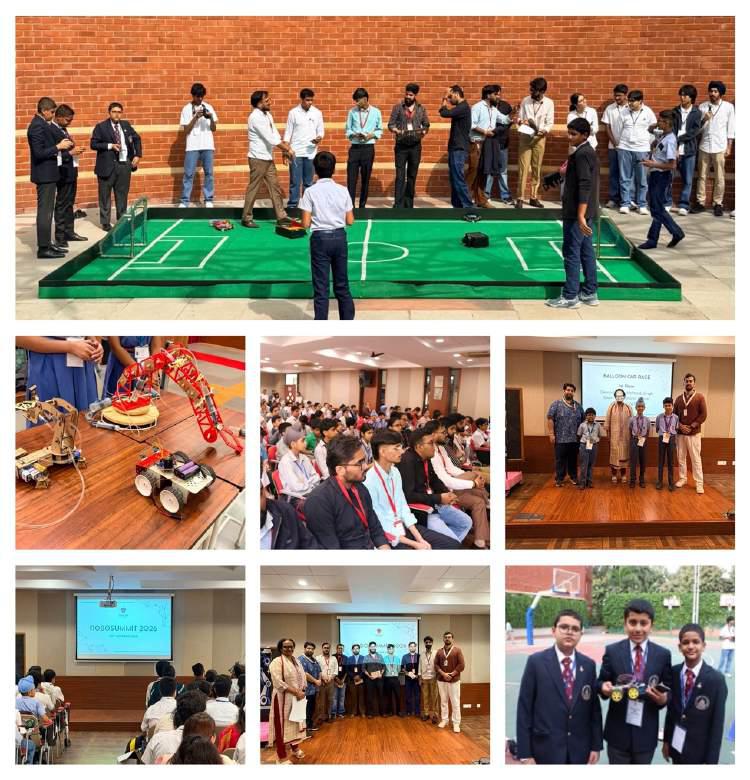
But if there was one event that defined RoboSummit 2026, it was Robo Soccer — played in that very
same space, now transformed into the day’s most electric arena. With the audience already settled into
the seating around the arena floor, every member had a ringside view, and they used it. The matches
were fast, physical, and fiercely contested — three robots per team, clashing in real-time bouts where
strategy, coordination, and mechanical durability were all tested simultaneously. What elevated the event
from a contest into a spectacle was the live commentary provided by Agam Bir Singh Nandha, lead
student organiser of RoboSummit 2026. His commentary was sharp, spontaneous, and utterly compelling
— calling every move, building the tension before each goal, and erupting alongside the crowd when one
finally landed. After every goal, the amphitheatre filled with thunderous applause that rolled up the rows
and echoed across the campus. The suspense between points kept the audience on the edge of their
seats from the opening whistle to the final one, and the natural acoustics of the open-air space amplified
every cheer into something that felt much larger than a school event. Robo Soccer was, without question,
the showstopper of the day.
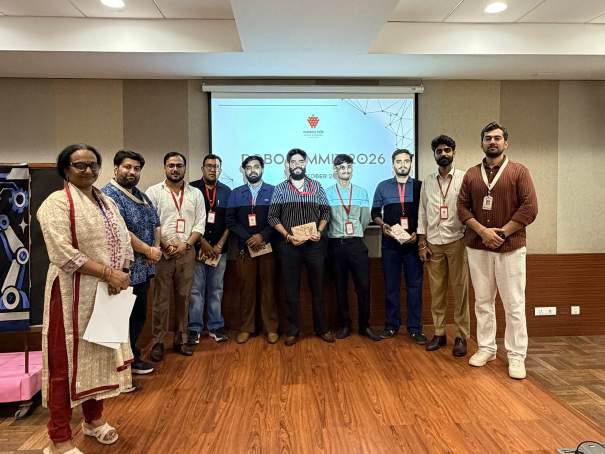
The judging across all events was handled by a distinguished panel from INNVERSE: Neeraj Aggarwal
(Founder), Gaurav Sharma (Co-Founder and Head of Operations), Vishal Kumar (STEM, IoT and
Robotics Trainer), Aditya Bansal (Industrial and Product Design, Chandigarh University), Harry Bhangal
(AI and Machine Learning Trainer), and Karan Sharma (International Education and Institutional
Collaboration). Their combined expertise across robotics, electronics, programming, and design ensured
that every run, every lift, every lap, and every match was assessed with thoroughness and integrity. SFHS
RoboSummit 2026 would not have been the event it was without the expertise, commitment, and
partnership of INNVERSE, and the school extends its deepest thanks to the entire INNVERSE team for
making this possible.
As the day drew to a close, the Organizing Committee brought participants together for the closing
ceremony. Prizes were presented to the winners by the educators of the Physics and IT Departments —
the very teachers whose collaboration had made RoboSummit 2026 possible, now placing the trophies in
the hands of the students they had championed through the day. Organisers brought the ceremony to a
close with a heartfelt address, thanking the audience, mentors, participants, and the educators from
visiting schools for being present for their children and for braving the day alongside them — through
every tense run, every near-miss, and every triumphant finish — sharing in the full roller coaster of
emotions that the students had lived through.
Event Video: Glimpses of RoboSummit 2026
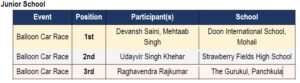
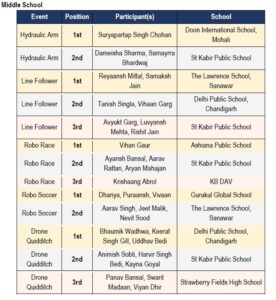
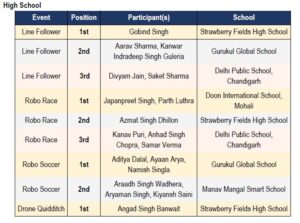
The results that crowned the day were as follows:
RoboSummit 2026 was more than a competition. It was a demonstration of what students across the
Tricity are capable of when given the space, the challenge, and the stage to build, compete, and excel.
We are already looking forward to what next year will bring.