October 16, 2026
Young Changemakers: Taking Action for Our Planet Responsible Action at Sukhna Lake
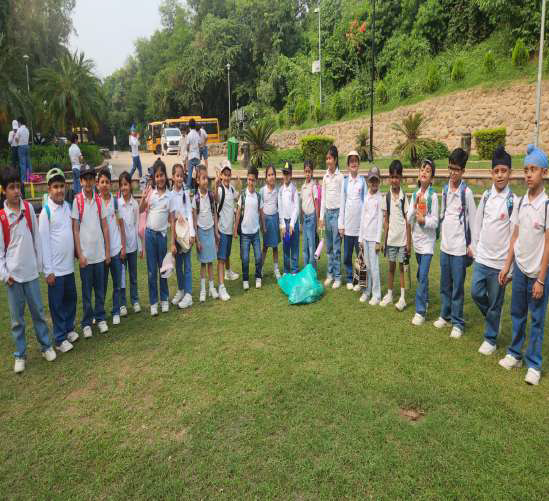
Grade 1 learners brought their classroom inquiry to life through a visit to Sukhna Lake, as part of the Design Thinking
Routine under the transdisciplinary theme, Sharing the Planet. Connecting with Line of Inquiry 3 – ‘The impact of human
actions on the environment,’ the experience offered learners an opportunity to put their ideas into action and explore the
central idea, ‘Choices that people make impact the environment.’
The journey began in the classroom, where learners revisited environmental concerns they had investigated through their
presentations. Through Empathise, Define and Ideate, they considered who or what was affected, identified problems and
suggested possible solutions. They explored how human actions could have both positive and negative impacts: littering,
polluting water and cutting down trees could harm living things, while disposing of waste responsibly, caring for plants and
protecting habitats could support them. During Prototype, learners developed a simple action plan, demonstrating agency
as they considered how they could contribute to a healthier environment.
At the Garden of Silence, learners demonstrated the Learner Profile attribute of being Caring by helping clean the
surroundings and planting trees. These actions gave concrete meaning to the central idea. By choosing to collect waste
and place it in bins, learners helped make a shared space cleaner and reduced the risk of litter harming living things. By
planting a tree, they contributed to the future growth of a habitat that could provide shade, food and shelter. They
connected their choices with the changes these could bring, recognising that some positive impacts, such as cleaner
surroundings, could be noticed immediately, while others would develop over time. The experience helped them
understand that people’s choices can cause environmental problems, but can also help address them.
The visit continued along the forest trail, where learners observed birds, animals and plants, including peacocks, swans,
ducks, herons, monkeys, dogs, bugs, butterflies and frogs. As Inquirers, they explored the surroundings with curiosity and
considered how living things depended on their habitats for food, water and shelter. Seeing different living things share
the same environment deepened their understanding of interdependence and the importance of protecting natural spaces.
Through observation, questioning and discussion, learners strengthened their research skills and thinking skills. They
connected their classroom learning with what they encountered during the visit and considered how visitors’ choices could
either protect or disturb a habitat. Keeping surroundings clean, respecting plants and observing animals without disturbing
them became meaningful examples of responsible behaviour.
On returning to school, learners revisited Prototype and completed Test, reflecting on their actions and how they had
demonstrated being caring. They considered what had changed, how living things might benefit and what would require
continued attention. They recognised that planting a tree was a beginning and that its growth would depend on ongoing
care.
Extending their learning beyond the visit, learners identified an environmental action to carry out at home, such as caring
for a plant, reusing paper, saving water or disposing of waste responsibly. This experience supported their understanding
that caring for the environment involves everyday choices and continued responsibility. It helped learners see themselves
as capable of taking purposeful action and making a positive contribution to the planet they share.
Read More
October 16, 2026
Learning Beyond the Classroom: A Visit to the Gaushala
Learning becomes truly meaningful when children have opportunities to connect their classroom inquiries with the world
around them. As part of the Action phase of the inquiry cycle, under the transdisciplinary theme, Sharing the Planet, our
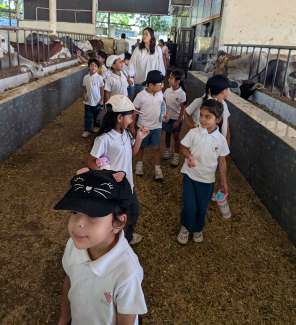
Kindergarten learners visited a gaushala to extend their understanding of Line of Inquiry 2 – Needs of Plants and Animals.
The visit offered a valuable opportunity for learners to explore how living things depend on one another and the importance
of care in sustaining life. With curiosity and enthusiasm, the children observed cows and calves in their surroundings,
gaining first hand insights into their basic needs for food, water, shelter and care. They watched the caretakers feed the
animals, maintain their shelters and ensure their well-being, recognising the important role people play in caring for
animals.
Through careful observation, thoughtful questioning, attentive listening and meaningful conversations, learners
strengthened their research and communication skills. Their observations brought the Central Idea, ‘Living things are
interdependent and need care to stay healthy,’ to life, helping them make connections between their classroom learning
and real-world experiences.
The experience also encouraged learners to reflect on the interconnectedness of plants, animals and human beings. As
they observed the care and responsibility demonstrated by the caretakers, they began to appreciate that even small,
thoughtful actions can make a meaningful difference to the well-being of living things.
Taking their learning a step further, learners were encouraged to plant a seed at home and nurture it as it grows. This
extension of their inquiry provided an opportunity to translate their understanding into purposeful action, fostering a sense
of ownership, empathy and responsibility towards the natural world.
More than just a visit, this experience was a meaningful step in our learners’ journey from inquiry and understanding to
reflection and action. It reinforced the importance of making responsible choices and inspired our young learners to
recognise that caring for the world around them begins with the little things they do every day.
Read More
October 15, 2026
Three Throwers, Three Medals: Javelin Day for SFHS
When Neeraj Chopra’s javelin landed at 87.58 metres at the Tokyo Olympics in August 2021, India won its first Olympic gold in athletics. For many young Indians, the javelin stopped being an unfamiliar event and became something to try. On Sunday, 11 October 2026, three SFHS students showed how far that idea has travelled.
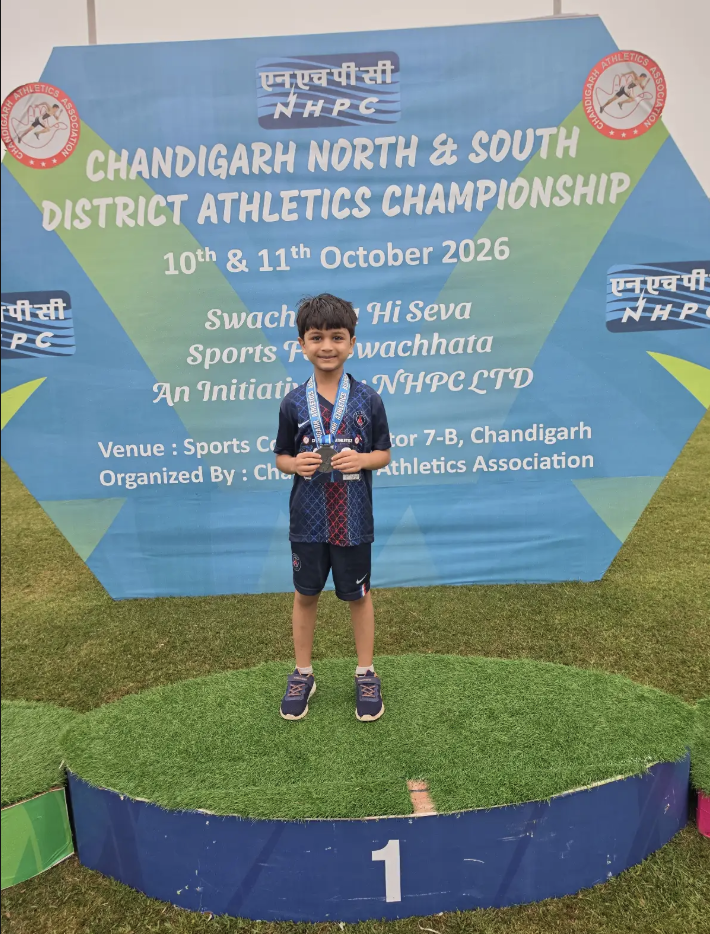
At the Chandigarh North and South District Championship 2026, held at the Sports Complex, Sector 7, our students won three javelin medals across three age groups.
Zuber Pratap Singh Dhillon (5A) took Silver in the Under-12 Boys event with a throw of 26.10 metres. Aveer Pratap Singh Dhillon (1C) won Bronze in the Under-8 Boys javelin with 11.80 metres, and added a Silver in the 4×25 metre mixed relay. Our youngest medallist, Arjun Singh Phoolka (KG-C), won Silver in the Under-6 Kids Javelin with 8.10 metres. A javelin throw rewards coordination more than brute force: a controlled approach, a well-timed plant, and a clean release. From kindergarten to Grade 5, these three young athletes showed that each of those skills can be learned early and sharpened with practice.
Congratulations, Zuber, Aveer and Arjun!
Read More
October 12, 2026
Historic Victory For Strawberry Fields High School: U-17 Boys Crowned Inter-School Football Champions!
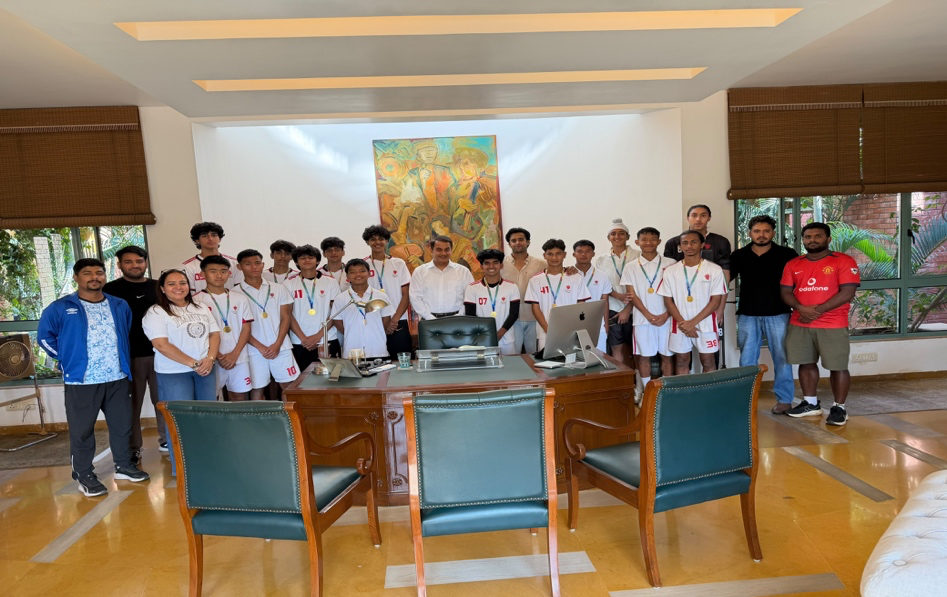
The U-17 Boys’ Football Team of Strawberry Fields High School (SFHS), Chandigarh, has created history by
winning the U-17 Inter-School Football Tournament for the first time!
In a spectacular display of skill, teamwork, discipline, and determination, the team clinched the championship with
a commanding 8–0 victory in the final, delivering a performance to remember. The boys also achieved the
remarkable feat of not conceding a single goal throughout the tournament, highlighting their exceptional defensive
strength and team coordination. The final witnessed brilliant attacking football, with Shivansh Arora and K Mukhtar
Rehman scoring two goals each, while Vanshraj, Greatson Hidam, and Lisham Amarson Singh also found the net,
contributing to the emphatic victory.
This historic triumph reflects the players’ hard work, the coaches’ dedication, and Strawberry Fields High School’s
continued commitment to sporting excellence. The achievement is a moment of immense pride for the entire school
community and showcases the talent, determination, and sportsmanship of its young footballers.
Congratulations to our U-17 champions, their coaches, and everyone who made this historic achievement possible!
Read More
October 12, 2026
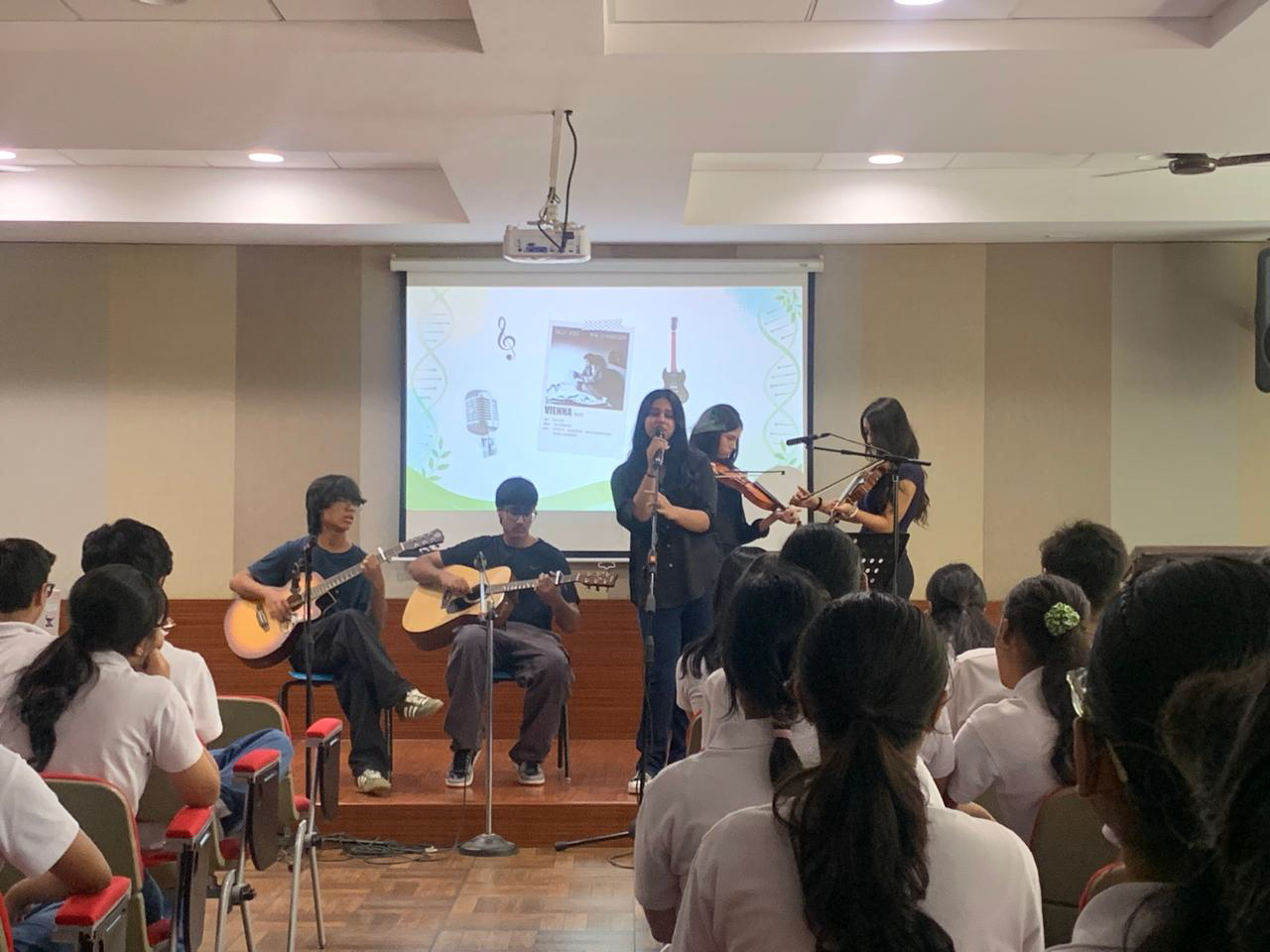
Helix Group Assembly Verdict – Who Gets to Judge?
The students of Class 9B, The Helix Group, presented a thought-provoking assembly exploring the role
of Artificial Intelligence in human life. The programme opened with references to real-world
developments, including European regulations requiring AI disclosure and restrictions in some U.S. states
on AI making student-related decisions. This set the stage for the central question: What happens when
machines are given the power to judge humans?
The concept unfolded through a talent show judged by AI systems, highlighting the contrast between
mechanical scoring and human interpretation. A dance performance received precise, data-driven
verdicts, prompting the audience to reflect on whether creativity and artistic expression can truly be
measured by numbers.
A student debate explored whether AI simplifies life or encourages people to outsource their thinking.
Concerns surrounding bias, overreliance on technology, and the loss of human context were raised. The
AI judges' criticism of the debate for lacking sufficient data further emphasised the limitations of machine
logic when compared to human reasoning.
Audience interaction revealed how readily people can place their trust in technology, at times even more
than in friends and family. A satirical news segment presented AI-related developments and society's
increasing dependence on chatbots for homework assistance and emotional support, reminding the
audience that these issues are already becoming part of everyday life.
The assembly concluded with a musical performance that was dismissed by the AI judges as
“inefficient.” This sparked a powerful final question: What exactly are you judging? The moment reinforced
the idea that effort, emotions, determination, and human experiences cannot be reduced to numerical
scores. The programme ended with a reminder that while AI is a valuable tool, it can never replace
genuine human connection, empathy, and understanding.
Key Takeaways
• AI in education is actively influencing policies, teaching, and learning.
• Human judgement values effort, empathy, creativity, and context beyond data.
• Mental well-being requires authentic human relationships rather than instant machine
responses.
• Student voices are essential in shaping how technology is used in schools and society.
Student Reflections
Sehar Kapoor- 9B
"As students, we constantly look forward to this time of the year. It is a time filled with ideas, teamwork,
and unexpected challenges that we work through together to reach common ground. This year's theme,
‘AI is Taking Over the World,' allowed us to explore different viewpoints, its consequences, and even
its benefits. Through the experience, we developed a deeper understanding of AI and its growing role,
particularly in education.
As a narrator and scriptwriter, I improved my speaking, writing, and collaborative skills. Most importantly,
I enjoyed working closely with my classmates, exchanging ideas, and creating memorable moments
together. It was a refreshing break from our usual school routine and an experience I will always cherish."
Anusha Malhotra- 9B
"Being the narrator of Class 9B's assembly alongside Shanaya Nain was truly a wonderful experience.
Despite having only a week to prepare, our class worked diligently to deliver a memorable presentation.
Our theme,’ AI Taking Over the World,' enabled us to combine humour, audience interaction, and
creative performances into one engaging programme.
Throughout the preparation process, we grew closer as a class and learned the importance of teamwork.
Although there were occasional disagreements, we learned to compromise, communicate effectively, and
respect different perspectives. Overall, the experience taught us valuable lessons that extended far
beyond the classroom."
Read More
October 6, 2026
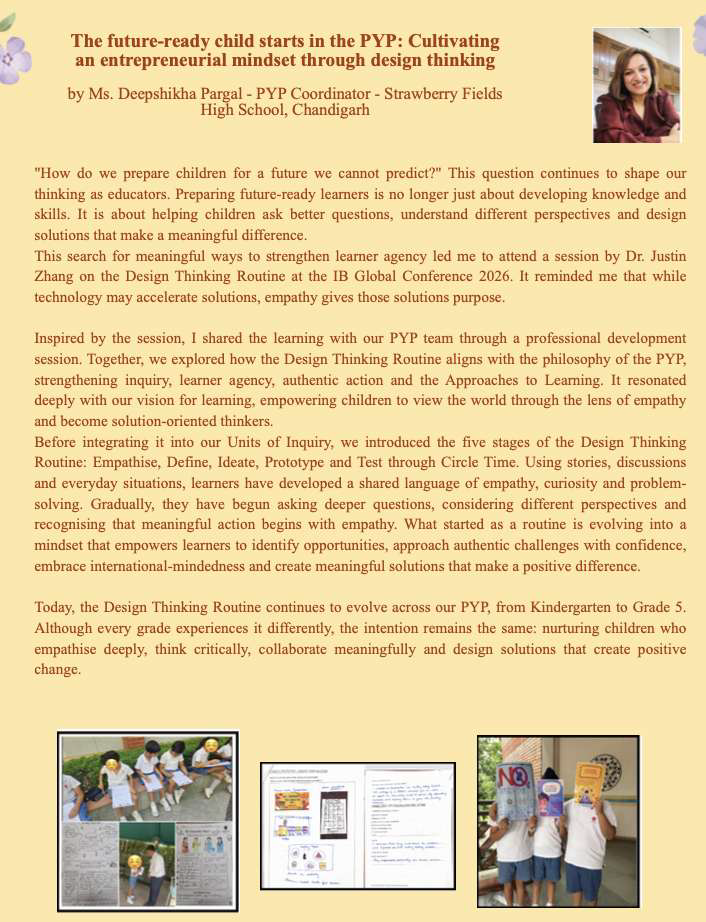
Design Thinking for a Future-Ready Child: Ms. Pargal’s Writing Featured in the NINNS Summer Newsletter
Strawberry Fields High School is proud to share that our PYP Coordinator, Ms. Deepshikha Pargal, has had her article,
“The future-ready child starts in the PYP: Cultivating an entrepreneurial mindset through design thinking,” published in the
NINNS (North India and Nepal Network of Schools) Summer Newsletter.
The article takes on a question that sits at the heart of education today: how do we prepare children for a future we cannot
fully predict? Ms. Pargal looks at this through the lens of Design Thinking, not simply as a five-stage process, but as a
way of developing children who can observe carefully, understand perspectives, identify real needs, generate ideas and
turn those ideas into thoughtful action.
Through the stages of Empathise, Define, Ideate, Prototype and Test, the article demonstrates how Design Thinking can
become a natural part of the PYP classroom. What began with a learning experience at the IB Global Conference was
brought into everyday practice through Circle Time and inquiry, allowing children to engage with authentic situations and
find meaningful ways to respond.
The classroom examples give the idea its real strength. Grade 2 students interacted with members of the school’s
housekeeping team to understand experiences they may otherwise have overlooked. Grade 5 students reflected on their
own health, screen-time and posture habits before designing awareness campaigns for their peers. In both instances, the
learning moved beyond identifying a problem. Children were encouraged to understand, question, imagine possibilities
and act with purpose.
It is this movement from understanding to action that gives Design Thinking its relevance within the PYP. Along the way,
children develop empathy, curiosity, creativity, collaboration, agency and problem-solving, qualities that also lie at the
heart of an entrepreneurial mindset.
As Ms. Pargal writes, “While technology may accelerate solutions, empathy gives those solutions purpose.” Within Design
Thinking, empathy becomes the starting point that helps ensure that ideas remain relevant, thoughtful and human-centred.
None of this is a coincidence. It reflects a way of thinking that Ms. Pargal has consistently worked to bring into the PYP
experience, where empathy becomes the starting point for deeper inquiry and Design Thinking gives children a way to
turn understanding into meaningful action. Over the years, she has helped shape learning experiences that encourage
children to observe closely, listen carefully, think creatively and respond with purpose. As a senior member of our PYP
team, her considered and consistent approach to teaching and learning continues to strengthen a culture where children
are encouraged not only to find solutions, but to understand why those solutions matter. This recognition brings welldeserved
visibility to work that has quietly been taking shape within our classrooms for years.
Read More
October 6, 2026
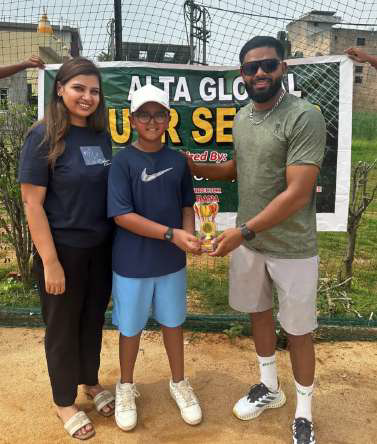
When Grit Meets a Racquet: SFHS Celebrates Its Young Champions!
As tennis fever grips the world with the US Open currently underway in New York, it's a fitting week to
spotlight two young players from Strawberry Fields High School who've been making waves of their
own on the court.
Anadya Mohan Gupta of Grade 4D clinched the 1st position in the U10 Girls category at a lawn tennis
tournament held at GNPS, Chandigarh, on 2nd August 2026. Anadya has been training hard on the
courts, and this win is a solid marker of just how far she's come.
Ayaan Aggarwal of Grade 5D bagged the First position at the UTR Matches, a tennis competition held
at the Ambala Lawn Tennis Academy on 23rd August 2026, going up against students from across
different cities to take the top spot.
Strawberry Fields High School congratulates Anadya and Ayaan on these wins and looks forward to
seeing where their game takes them next.
Read More
October 6, 2026
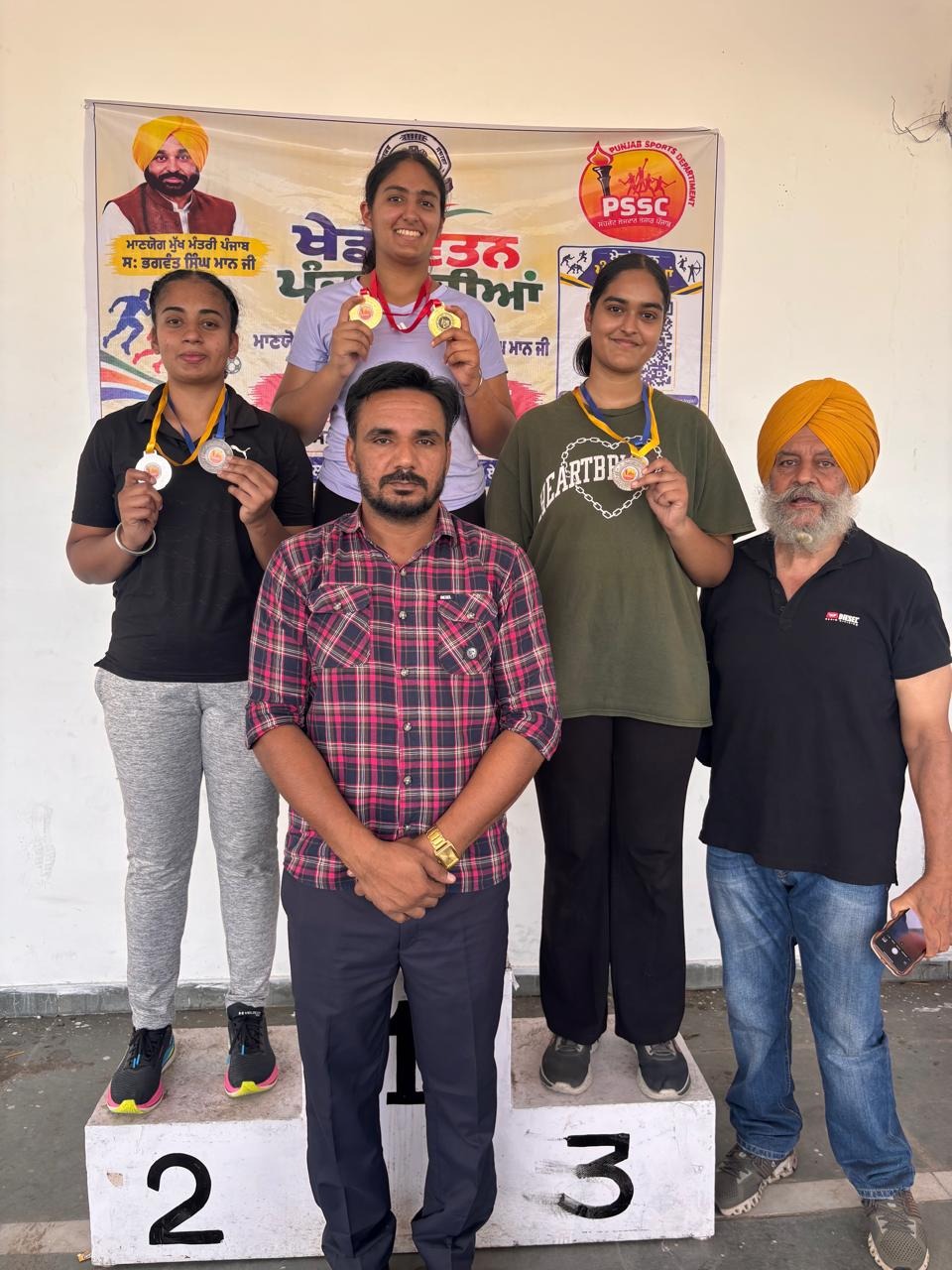
Sabreen Kaur Lidhar : Excellence in Athletics
Sabreen Kaur Lidhar, IBDP Year 1, has secured Gold Medals in both Shot Put and Discus Throw in the Under-21 category at the District Competition of Khedaan Watan Punjab Dian, organised by the Government of Punjab.
The competition was held at Government College, Phase 6, SAS Nagar, Mohali, bringing together young athletes from across the district. Sabreen’s achievement reflects her dedication, discipline and sustained pursuit of excellence in athletics.
We congratulate Sabreen on this commendable achievement and wish her continued success in her sporting pursuits.
Read More
Back to top